


Facilitating Economic Diversification and Resilience Strategy Development in Guam Following Typhoon Mawar, May 2023
Client: U.S. Department of Commerce, Economic Development Administration (EDA)
Guam’s economic resilience is threatened by its overdependence on tourism as a portion of its gross domestic product. While visitor arrivals increased significantly in FY23 compared to the previous year, total visitor numbers remained 62% lower than in 2019, resulting in a cumulative loss of $95 million in tax revenues not collected from FY2020 through FY2023.
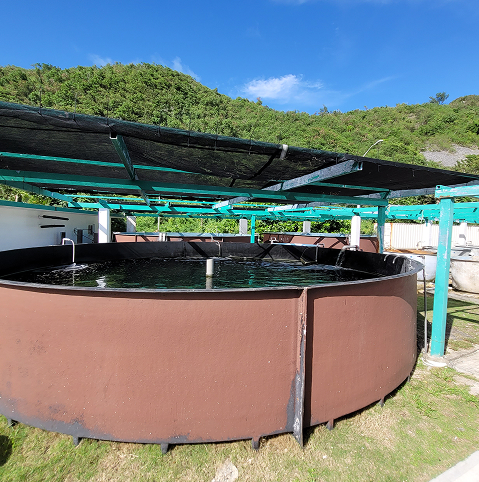
Working under the EDA’s Economic Recovery Support Function, a NOVACES team launched a hands-on effort to develop a vision and a funding strategy for a Guam Aquaculture Innovation Center (GAIC) to serve as a regional catalyst for industry development, research, innovation, and business incubation.
Challenges
Category 4, Typhoon Mawar hit Guam on May 24th, 2023, causing widespread destruction that stalled the tourism industry’s recovery from the COVID-19 pandemic, exacerbated a shortage of affordable housing, and led to the loss of approximately 7,000 jobs in the month after the storm. Guam’s commercial airport, A.B. Won Pat International Airport, was closed to all but humanitarian flights for five days due to severe flooding of airport buildings. The interruption demonstrated the island’s precarious level of food insecurity – Guam imports more than 90% of its food, including seafood – and the need to diversify the economy.
Solutions Delivered
NOVACES contractors, serving the U.S. Economic Development Administration’s Economic Recovery Support Function, partnered with the Guam Economic Development Authority (GEDA) and the University of Guam to develop projects designed to diversify Guam’s economy and increase food security for Guam residents and stationed military personnel.
The NOVACES Team
– Facilitated 6 working sessions and a Governor’s Roundtable from January to May 2023, in which the lead agencies and the University of Guam identified potential sites, key functions and a governance structure for the Guam Aquaculture Innovation Center.
– Organized training events for Mayors, community-based nonprofits, and government agencies on competitive project development and federal funding applications.
– Coordinated subject matter experts from other federal agencies to consult with Guam agencies and the University of Guam on specific engineering and environmental regulation topics.
Facilitated 6 working sessions and a Governor’s Roundtable from January to May 2023, in which the lead agencies and the University of Guam identified potential sites, key functions and a governance structure for the Guam Aquaculture Innovation Center.
Organized training events for Mayors, community-based nonprofits, and government agencies on competitive project development and federal funding applications.
Coordinated subject matter experts from other federal agencies to consult with Guam agencies and the University of Guam on specific engineering and environmental regulation topics.
Key Takeaways
NOVACES provided critical research and insights that enabled state and local leaders to make data-driven recovery and development decisions. Our efforts helped:
Integrating multiple business models can form a robust ecosystem for launching an industry that has both home-based enterprise and industrial production potential.
Public-private industry development initiatives offer great potential and may require a dedicated facilitating mechanism to advance from an idea to a fundable proposal.
Local communities and smaller NGOs have important roles in economic diversification and can help reduce the risk of marginalizing some populations and communities.