


BP Deepwater Horizon Grand Isle Material Segregation Project
Client: BP Exploration and Production (BPXP)
In August 2013, a Material Segregation Project was conducted on Grand Isle, Louisiana, to scientifically analyze beach-cleaning debris and quantify the presence of oil residues attributed to the Deepwater Horizon spill. The project was designed by NOVACES and led by the U.S. Coast Guard with scientific input from NOAA and BP. The initiative aimed to validate the effectiveness of post-cleaning monitoring (P&M) and ensure accurate reporting of residual contamination. The State of Louisiana declined participation but was invited to observe the methodology and results. NOVACES team members provided the project design, sampling plan guidance, statistical analysis of sampled materials, and the final report of the findings.
Challenges
Despite continued P&M efforts following the Deepwater Horizon spill, doubts remained about the actual oil content of collected materials−specifically, whether they were truly linked to materials from the Deepwater Horizon spill. The materials often contained mixed substances such as shell hash and other non-oil-related debris, making visual identification insufficient. Stakeholders required credible, data-supported segregation of materials to confirm the reduced presence of oil and to improve future planning and cleanup operations.
Solutions Delivered
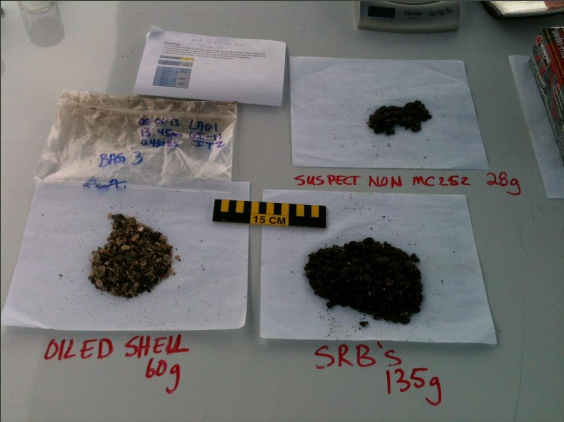
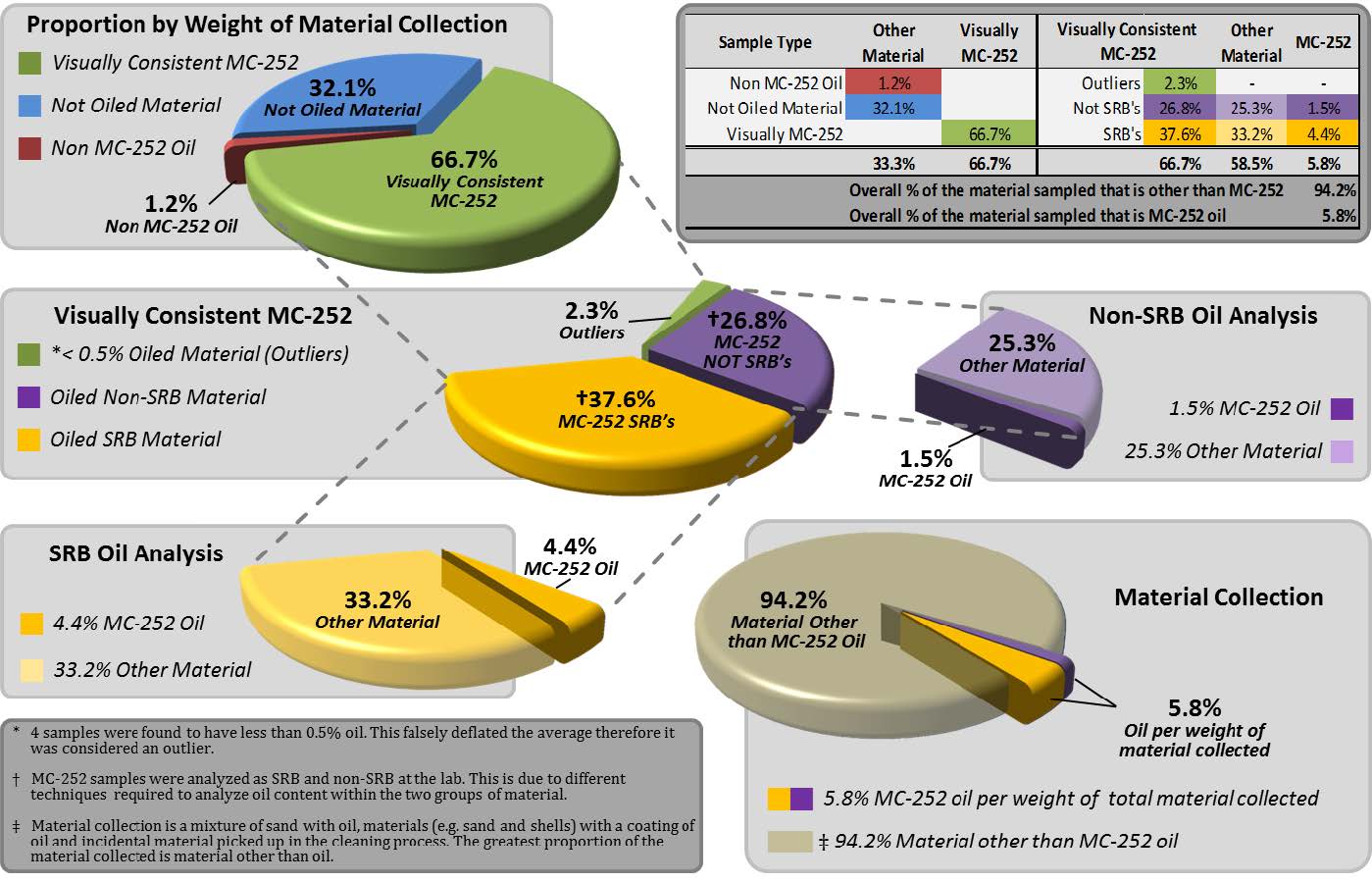
A scientifically reviewed segregation plan was implemented from August 1–31, 2013, covering 114 visits across 14 zones on Grand Isle. A randomized sampling approach selected 64 of 134 collected material bags for detailed segregation and lab analysis. Materials were categorized into visually consistent with Deepwater Horizon material (referred to as MC-252 in the graphs below), suspected non-Deepwater Horizon spill, and shell hash/other debris. Lab tests measured the oil content within each category.
Results revealed that only 5.8% of the total collected material actually contained oil, while 94.2% was composed of non-oiled substances. This validated that the majority of material being recovered through routine P&M efforts no longer posed a significant contamination threat. The chart below illustrates this breakdown:
Key Takeaways
NOVACES provided critical research and insights that enabled state and local leaders to make data-driven recovery and development decisions. Our efforts helped:
Scientific segregation confirmed that oil-related material comprised only a small fraction (5.8%) of the total collected debris.
Visual identification was generally reliable, with lab verification supporting field assessments.
The approach demonstrated a replicable method for assessing contamination levels and informed stakeholders with credible data.
This effort provided transparency, encouraged interagency cooperation, and created a data-driven path for concluding recovery operations.