


Island of Maui Infrastructure Logistics Needs Assessment – Strategic Infrastructure Assessment for Reconstruction Success
Client: U.S. Department of Commerce, Economic Development Administration
The NOVACES Program and Construction Management team was engaged to conduct a comprehensive evaluation of infrastructure systems critical to the 2023 Maui Wildfires recovery and reconstruction effort. Our assignment included identifying all infrastructure elements, providing an engineering assessment of all systems, and logically organizing the systems to model potential choke points. Based on this analysis, we delivered targeted recommendations to mitigate risks and remove obstacles that could hinder progress, ensuring a more efficient and resilient rebuilding process.
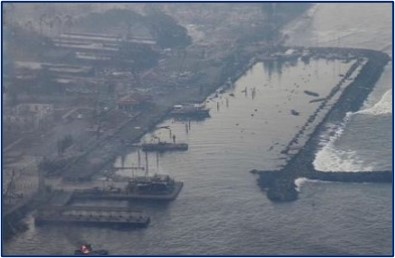
On August 8, 2023, catastrophic wildfires devastated the community of Lahaina on the Island of Maui, Hawai‘i. The fires claimed 102 lives and destroyed more than 2,200 structures—including 281 commercial properties—across a burn area of over 2,700 acres spanning both Lahaina and Kula. An estimated 7,796 residents were displaced. Disaster response efforts were led by the County of Maui, the State of Hawai‘i, the Federal Emergency Management Agency (FEMA), and other state and federal agencies. Initial assessments by the University of Hawai‘i Pacific Disaster Center estimate that the cost of debris removal, site clearing, and reconstruction of the residential, commercial and public infrastructure will exceed $5 billion.
Located in the heart of the Pacific Ocean, Maui relies on imports for more than 95% of its commodities−including construction materials, goods, and heavy equipment. A significant portion of its skilled construction workforce also originates from neighboring islands, the U.S. mainland, and other countries. As is common following a major disaster, recovery efforts will heighten competition for each of these essential resources: contractors, materials, equipment, labor, and infrastructure, especially as the rebuilding of Lahaina begins.
CPI and Process Management Challenges
To effectively plan for an accelerated rebuilding effort after debris removal, federal, state, county, and community leaders required an inventory of the island’s logistics infrastructure along with a detailed analysis of its capacity and throughput to support the anticipated surge in demand for materials, equipment, and labor. The NOVACES team was tasked with identifying all infrastructure elements, providing an engineering assessment of all systems, organizing them logically to model choke points and points of concern, and generating recommendations to improve or eliminate obstacles that could negatively impact the reconstruction effort.
Solutions Delivered
A NOVACES team of highly experienced program and construction management professionals began the critical mission to develop an inventory of the infrastructure serving the Island of Maui. The team organized their research into six elements:
Construction Industry Logistics
Assess off-the-shelf construction management software applications to manage, coordinate, and align multiple complex activities and reduce the potential for conflict.
Residential Workforce Housing
Assess the current inventory of short-term housing to accommodate an increase in construction workforce.
Construction Workforce
Assess the local and regional skilled and unskilled pools of construction workforce and model it for a 20%-30% increased demand.
Ocean & Seaport Transport
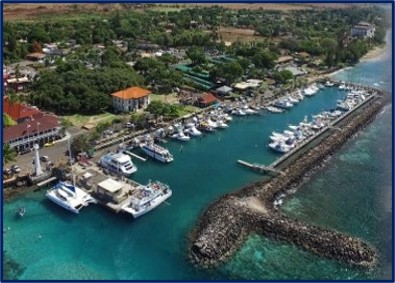
Assess the island’s leeward commercial seaport and the three smaller windward charter seaports.
Overland Transport
Assess the island’s commercial over-the-road transportation capacity to move commodities and construction materials efficiently.
Critical Infrastructure
Assess the capacity and operational effectiveness of the island’s supporting infrastructure, including water utility systems, wastewater utility systems, power utility systems, communications and broadband utility systems, and roadway transport infrastructure.
Key Takeaways
The NOVACES team engaged in brainstorming sessions with community leaders, public utility leaders, the Maui County Mayor’s office, key county leadership, FEMA infrastructure recovery leaders, EDA leadership, and the State of Hawai’i Governor’s office. After assembling a thorough assessment of the Island of Maui’s complex infrastructure in its current condition, the next phase of the project involved a comprehensive engineering analysis to identify infrastructure systems suitable for improvement projects aimed at enhancing efficiency, capacity, and overall effectiveness. The NOVACES team generated 26 unique recommendations, many of which included preliminary concept designs and rough order-of-magnitude (ROM) cost estimates to support informed decision-making.
To share progress and encourage dialogue, the NOVACES team facilitated six detailed progress meetings throughout the duration of the project with state, local, community, and federal stakeholder representatives. Through these conversations, we received several hundred constructive comments from stakeholders; all of which were successfully addressed, memorialized, and integrated into the final report.
In disaster recovery, efficiency is critical to getting businesses reopened and helping communities rebuild. Having highly experienced technical professionals at hand to deliver relevant data and actionable solutions to complex engineering challenges, even under the pressure of aggressive timelines, is key to making progress.
In the aftermath of a disaster, when state and local leaders are inundated with urgent tasks and high-stakes decisions, gathering reliable data is essential to ensure that plans are drafted upon realistic assessments of the capacity and limitations of the existing infrastructure so that complex recovery operations do not get derailed.
Stakeholders can hold vastly different recovery goals, which complicate and, in some cases, can derail recovery efforts. Data-driven analysis to assess and compare the viability of recovery strategies produces a more objective starting place for long-term planning and healing.
NOVACES created a partnering environment through its means and methods to collect vast amounts of as-is infrastructure data. This work occurred while the community of Lahaina and the Island of Maui were recovering from a catastrophic wildfire that claimed the lives of 102 of its residents. (Two remain unaccounted for.) Respecting the grieving process of residents and the cultural sensitivities inherent after such trauma and loss is essential to effectively engage with the community and gain its support.
The engineering logistics analysis and many of the recommendations delivered by NOVACES were incorporated by both the Mayor of Maui and the Governor of Hawai‘i in their official requests for government grant assistance.
The Contractor Performance Assessment Reporting System evaluation factors regarding the execution and delivery of this assignment were all excellent.