


NOVACES white papers inform data-driven economic recovery planning after Hurricane Maria
Client: U.S Department of Commerce, Economic Development Administration (EDA)
Life was brought to a near standstill for the people of Puerto Rico due to the scale of destruction left by Hurricane Maria in September 2017. A decade-long debt crisis and a lack of infrastructure investment prior to the storm meant that rebuilding alone would not be sufficient to revive the economy. The NOVACES team worked to implement the EDA’s Economic Recovery Support Function (ERSF) Field Coordinator’s strategy to establish the foundations of a resilient economy.
Challenges
Hurricane Maria hit Puerto Rico on September 20, 2017, 13 days after Hurricane Irma, culminating in the worst natural disaster in recorded history to affect the Island. More than 3,000 people lost their lives. The destruction of the power infrastructure affected 3.7 million residents, 45,000+ private businesses, and 1,800+ public services. FEMA estimated total damages to be more than $20 billion.
Focused on laying the foundations for long-term economic recovery and resilience, EDA’s ERSF identified three key initiatives to address systemic weaknesses and pursue unique competitive advantages:
- Increase and diversify access to federal and philanthropic funding by strengthening the capacity of the local non-profit sector;
- Develop Puerto Rico’s first federally recognized Economic Development District as a leveraging tool to build municipal partnerships and leadership for developing economic drivers; and
- Define and establish the foundations of an economic diversification strategy.
Solutions Delivered
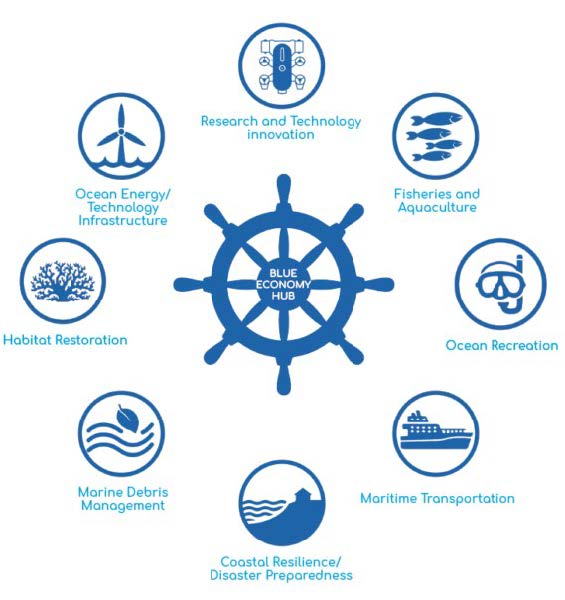
Understanding that a robust recovery strategy required data and analysis, the NOVACES team authored a series of white papers identifying Puerto Rico’s unique competitive advantages within the regional and global economy, including blue economy industries, resiliency, and creative industries.
Prioritize Building Capacity of the Non-Profit Sector to Build Capacity
Assessments found that at the time of Hurricane Maria, only eight percent of Puerto Rican nonprofits had 501(c) (3) federal tax-exempt status. This presented a significant obstacle to deploying federal recovery funding to diverse communities, particularly those with the most acute needs. A strategy was developed to build a strong and diverse pool of potential applicants in the non-profit sector to serve as long-term recovery partners.
The ERSF recognized that a substantial investment in capacity building was necessary to develop a skilled and diverse cadre of grant writers capable of accessing and managing essential federal funding. The objective was to engage a cadre of professionals who, through a series of intensive training programs delivered by a team of subject matter experts, would develop the skills necessary to successfully apply for and manage federal grant funding. The participants would also commit to transferring these skills repeatedly to colleagues throughout Puerto Rico. Thus, the initiative aimed to enhance the capacity of Puerto Rico’s third sector to build its own capacity.
Establish Puerto Rico’s First Economic Development District
The absence of a regional economic planning organization left Puerto Rico at a disadvantage in terms of federal coordination and competing for federal resources. The ERSF launched an initiative to form Puerto Rico’s first federally recognized Economic Development District (EDD).
Enhance Competitiveness through Economic Diversification
Prior to Hurricane Maria, Puerto Rico was in a long-term recession. The economy moved from an agricultural base to industrial/manufacturing during the 1950s. However, manufacturing started to wane in the 1990’s due to tax incentives being phased out. The ERSF saw an immediate need to move toward economic diversification, focused on locally owned and controlled businesses taking advantage of Puerto Rico’s unique competitive advantages in the blue economy, research and innovation, and creative industries.
Key Takeaways
NOVACES provided critical research and insights that enabled state and local leaders to make data-driven recovery and development decisions. Our efforts helped:
Research conducted in the first year of the assignment served as reference material for multiple federal agencies and the Government of Puerto Rico for years into the recovery effort and supported data-driven strategic planning.
NOVACES’ experienced Certified Economic Developers provided essential skills for conducting industry and workforce research and interpreting the data for an audience focused on multiple agendas.
The strategic focus enabled the team to coordinate with other federal agencies and multiple stakeholders to better align recovery efforts to Puerto Rico’s unique competitive advantages as the pillars of economic diversification, including the development of the Blue Economy.